Complete Guide to Cold Storage for Bitcoin Using Secure Offline Methods
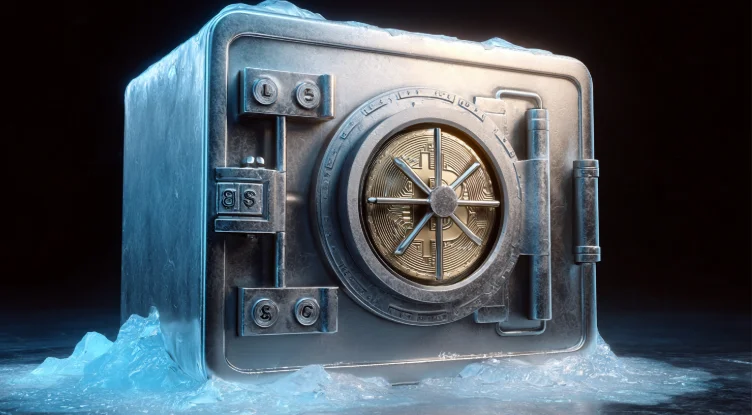
Bitcoin represents a unique asset class requiring security approaches that match its distinctive characteristics. Unlike traditional investments protected by institutional infrastructure, regulatory frameworks, and insurance mechanisms, Bitcoin ownership reduces entirely to cryptographic key control. Whoever possesses the private keys controls the coins—permanently and irreversibly, with no appeals process or fraud protection available when security fails. This fundamental reality has driven serious Bitcoin holders toward offline storage solutions that remove private keys from internet-connected environments where attackers operate continuously.
This comprehensive guide examines everything you need to know about cold storage for bitcoin, from foundational principles through practical implementation using Ledger devices and alternative methods. Whether you're securing your first satoshis or optimizing protection for substantial holdings, understanding available approaches helps match security strategies to your specific situation and risk tolerance.
Why Bitcoin Demands Dedicated Offline Storage Solutions
While all cryptocurrencies benefit from cold storage protection, Bitcoin's unique characteristics make offline security particularly compelling. The asset's monetary properties, historical context, and philosophical foundations all point toward self-custody as the appropriate storage approach for serious long-term holders committed to preserving wealth.
Digital scarcity requires matching physical security measures
Bitcoin's 21 million coin supply cap creates genuine digital scarcity—a property requiring centuries of precious metals mining but achieved through mathematical certainty in Bitcoin's protocol. This programmatic scarcity drives Bitcoin's store-of-value proposition and explains why holders treat BTC accumulation as long-term wealth preservation rather than speculative trading activity.
Assets intended for generational wealth preservation demand security measures matching their importance. Traditional wealth storage involves bank vaults, safety deposit boxes, and institutional custodians designed for multi-decade protection. A ledger bitcoin vault provides equivalent protection for digital assets, removing holdings from environments where momentary security lapses can cause permanent, irreversible losses that no institution can reverse.
The irreversibility of Bitcoin transactions amplifies security requirements beyond traditional assets. Banks offer fraud protection, transaction reversals, and account recovery mechanisms. Bitcoin provides none of these safety nets—successful theft is permanent and typically untraceable. This finality makes prevention the only viable security strategy, and cold storage for bitcoin provides the most effective prevention available to individual holders.
Historical exchange failures destroying billions in customer BTC
Bitcoin's history provides abundant cautionary examples motivating offline storage adoption. Exchange platforms—regardless of reputation, scale, regulatory compliance, or apparent security sophistication—have repeatedly failed in ways that destroyed customer holdings entirely and irreversibly without recourse.
Mt. Gox dominated early Bitcoin trading before collapsing in 2014 with approximately 850,000 BTC missing—worth billions at subsequent valuations. Customers who trusted the exchange with custody lost everything without meaningful recovery. Bitfinex, Cryptopia, QuadrigaCX, and numerous smaller platforms followed similar devastating patterns across subsequent years.
The 2022 FTX collapse demonstrated that even modern, regulated, seemingly sophisticated exchanges can implode catastrophically without warning. Billions in customer Bitcoin and other assets vanished through fraud and mismanagement that external observers couldn't detect until too late. Users maintaining bitcoin cold wallet ledger storage remained completely unaffected while exchange customers faced total losses and lengthy bankruptcy proceedings offering minimal recovery.
Self-custody alignment with Bitcoin's decentralization philosophy
Bitcoin's design embodies specific values: decentralization, censorship resistance, and individual sovereignty over money. Storing BTC on exchanges contradicts these principles fundamentally, reintroducing exactly the trusted intermediaries that Bitcoin's protocol eliminates through its peer-to-peer architecture.
Self-custody through offline storage fulfills Bitcoin's philosophical promise completely. Your keys, your coins, your responsibility—and your freedom from institutional permission or control. No exchange can freeze your cold-stored Bitcoin. No government can seize assets they cannot locate or access. No corporate failure can destroy holdings you control directly through your own devices and backups.
This sovereignty carries corresponding responsibility that users must accept. Self-custody means no customer support to recover lost passwords, no fraud department to reverse unauthorized transactions, no insurance covering security failures you cause through negligence. Many Bitcoin holders embrace this responsibility willingly, recognizing that true ownership requires accepting true accountability for protection.
Cold Storage for Bitcoin Methods Compared
Several approaches exist for removing Bitcoin private keys from internet-connected environments. Each method offers different balances between security, convenience, and cost. Understanding these options helps investors select solutions matching their specific requirements and technical capabilities.
Hardware wallets as accessible gold standard for most users
Hardware wallets represent the most practical cold storage for bitcoin solution for most users, combining strong security with reasonable usability that doesn't require technical expertise. These purpose-built devices incorporate Secure Element chips—specialized processors designed specifically to protect sensitive cryptographic operations—that isolate private keys from potential threats regardless of connected computer security status.
Leading manufacturers like Ledger submit products for independent security certification, providing third-party validation of protective claims beyond marketing assertions. Common Criteria Evaluation Assurance Levels reaching EAL5+ and EAL6+ indicate rigorous testing and demonstrated attack resistance under laboratory conditions replicating sophisticated threat scenarios.
The bitcoin cold wallet ledger experience leverages certified security architecture while providing Bitcoin-specific functionality through dedicated applications optimized for BTC storage and management. Users benefit from intuitive interfaces, comprehensive companion software, and ongoing firmware updates addressing discovered vulnerabilities—advantages that more primitive cold storage approaches cannot match.
Air-gapped computers for institutional-grade requirements
Air-gapped computers represent the maximum-security offline storage approach, dedicating entire systems to Bitcoin operations without any network connectivity whatsoever. These setups typically involve permanently disconnected computers running specialized signing software, with transaction data transferred via QR codes or manually moved memory cards.
This approach appeals to advanced users managing substantial holdings who accept complexity costs for additional security margins beyond what hardware wallets provide. Air-gapped setups eliminate hardware wallet supply chain concerns—attackers cannot compromise devices that users configure independently from commodity hardware components they source and verify themselves.
The tradeoffs involve significant technical overhead unsuitable for most individual investors. Users must maintain dedicated systems, manage software updates without network access, and develop workflows for QR-based or sneakernet transaction signing. For most individual investors, modern hardware wallets like Ledger provide comparable security with dramatically improved usability.
Multisignature setups distributing signing authority securely
Multisignature configurations require multiple independent keys to authorize transactions, eliminating single points of failure inherent in standard single-key setups. A 2-of-3 multisig wallet, for example, requires any two of three keys to sign—meaning theft or loss of one key doesn't compromise funds or prevent recovery.
This architecture provides protection against both theft and loss scenarios simultaneously. An attacker capturing one key cannot move funds without additional keys from other locations. A user losing one key can still access funds using remaining keys while generating a replacement. The distributed nature dramatically improves security compared to single-signature alternatives for high-value holdings.
Implementation involves multiple hardware wallets—ideally from different manufacturers for implementation diversity—each holding one multisig key. Geographic distribution of devices ensures that localized disasters or targeted theft cannot capture enough keys for unauthorized access or prevent legitimate recovery when needed.
Bitcoin Cold Wallet Ledger and Alternative Methods
| Method | Security Level | Cost | Complexity | Best For |
|---|---|---|---|---|
| Ledger Hardware | Very High | $79–$399 | Low | Most Users |
| Coldcard | Maximum | $148–$238 | Medium | Bitcoin Maximalists |
| Paper Wallet | Medium | Free | Medium | Single Large Deposits |
| Air-Gapped PC | Maximum | $200+ | High | Advanced Users |
| Multisig Setup | Maximum | $300+ | High | Institutional Holdings |
| Steel Backup | Disaster-Proof | $30–$100 | Low | Everyone |
Setting Up Your Ledger Bitcoin Vault Step by Step
Ledger devices provide accessible entry into Bitcoin cold storage while supporting advanced features as users develop expertise. Understanding proper implementation details helps optimize your ledger bitcoin vault configuration from initial setup through ongoing management and optimization.
Installing and configuring the native Bitcoin application
Ledger Live serves as the primary interface for managing your bitcoin cold wallet ledger setup. After device initialization and seed phrase recording, install the Bitcoin application through the Manager section. The application installs directly on your Ledger device, with Ledger Live providing the companion interface for transaction preparation and portfolio visibility.
Configuration options include address format selection affecting both compatibility and fee efficiency. Native SegWit (bc1q addresses) provides lowest transaction fees and should be default for most users seeking cost optimization. Taproot addresses (bc1p) enable latest Bitcoin protocol features including enhanced privacy for certain transaction types. Legacy address support remains available for compatibility with older systems requiring traditional address formats.
The Bitcoin application supports both single-signature and multisignature configurations, enabling users to start with simpler setups and progress to more sophisticated arrangements as holdings grow and expertise develops. This flexibility makes Ledger suitable for Bitcoin storage across the entire investor experience spectrum.
Generating secure receiving addresses for BTC deposits
Generate receiving addresses through Ledger Live, always verifying addresses display correctly on your hardware device screen before sharing them or using them for deposits. This verification prevents address substitution attacks where malware on connected computers might display different addresses than actually generated by your secure device.
Each verification confirms the displayed address truly corresponds to keys held within your ledger bitcoin vault. Only addresses confirmed on device screens should receive funds—never trust addresses displayed only on potentially compromised computer screens regardless of how legitimate they appear or how trusted the software seems.
For enhanced privacy, generate fresh receiving addresses for each deposit rather than reusing addresses across multiple transactions. Address reuse enables blockchain observers to link transactions and build pictures of your holdings and activity patterns. Fresh addresses for each receipt maintain transaction privacy while all addresses remain recoverable from your single seed phrase.
Bitcoin Cold Wallet Ledger Configuration Process
- Purchase Ledger device directly from official manufacturer store
- Initialize device and securely record 24-word recovery phrase
- Install Bitcoin application through Ledger Wallet companion software
- Generate receiving address and verify display matches device screen
- Send small test transaction from exchange to confirm functionality
- Create steel backup of seed phrase for fire and water resistance
- Transfer main Bitcoin holdings only after confirming test succeeds
- Store seed backup in geographically separate secure location
UTXO management and transaction fee optimization techniques
Bitcoin transactions consume unspent transaction outputs (UTXOs)—the discrete units comprising your total balance from previous incoming transactions. Effective UTXO management improves both privacy and fee efficiency, representing advanced optimization available through thoughtful cold storage for bitcoin practices.
Ledger Live displays individual UTXOs comprising your balance, enabling selective input choosing for transaction construction when using advanced mode. Consolidating many small UTXOs during low-fee periods reduces future transaction sizes and costs. Avoiding unnecessary consolidation preserves privacy by preventing address linkage through common inputs in single transactions.
Transaction fee selection significantly impacts confirmation speed and cost. Ledger Live provides fee estimates based on current network conditions, but advanced users may prefer manual fee setting for optimization. During network congestion, higher fees ensure timely confirmation. During quiet periods, minimal fees suffice while reducing costs—patience during low-priority transfers saves meaningful amounts over time.
Advanced Ledger Bitcoin Vault Security Techniques
Beyond basic storage and transactions, Ledger devices support advanced techniques that enhance security and functionality for sophisticated Bitcoin holders seeking maximum protection and control over their holdings.
Using passphrase feature for hidden wallet protection layer
The optional passphrase feature creates additional wallet derivation beyond the standard 24-word seed phrase. Any passphrase entered generates a completely separate wallet with different addresses and balances—effectively creating hidden wallets accessible only with both the seed phrase and the specific passphrase used during access.
This capability enables sophisticated security strategies unavailable with basic configurations. A decoy wallet with minimal funds satisfies attackers who force device access under duress, while substantial holdings remain hidden in passphrase-protected wallets. Without knowing specific passphrases, attackers cannot even detect that additional wallets exist on the device.
Passphrase protection requires careful management—forgotten passphrases mean permanently lost access to associated funds with no recovery possibility. Document passphrases through secure offline methods separate from seed phrase storage. The additional security comes with additional responsibility for maintaining access to both required components indefinitely.
Connecting hardware to Bitcoin-specific software like Sparrow
While Ledger Live provides comprehensive functionality, Bitcoin-specific software offers additional capabilities for advanced users seeking enhanced features beyond standard companion applications. Sparrow Wallet, Electrum, and other applications connect to Ledger hardware while providing specialized Bitcoin functionality.
Sparrow Wallet particularly suits privacy-conscious users, offering comprehensive coin control, CoinJoin coordination capabilities, and full node connectivity. Your Ledger device handles all signing operations—Sparrow never accesses private keys—while providing interface capabilities and privacy features beyond Ledger Live's standard scope.
Full node integration eliminates third-party server dependencies for transaction verification entirely. Running your own Bitcoin node and connecting Ledger through compatible software ensures complete sovereignty—nobody else sees your transactions or can censor your operations. This configuration represents maximum cold storage for bitcoin security combined with maximum privacy.
Cold Storage for Bitcoin Best Practices
- Generate seed phrase in completely private location away from cameras
- Never store recovery phrase digitally in any format whatsoever
- Use passphrase feature creating additional hidden wallet security
- Verify receiving addresses on device screen before every transaction
- Test recovery process annually using small Bitcoin amount
- Store steel seed backup in fireproof and waterproof container
- Document inheritance procedures clearly for trusted family members
- Consider geographic distribution protecting against regional disasters
Integrating hardware signing with watch-only wallet software
Watch-only wallets display balances and generate unsigned transactions without holding private keys, enabling convenient portfolio monitoring without security exposure. This separation allows daily balance checking on internet-connected devices while signing keys remain safely offline in your bitcoin cold wallet ledger.
Configure watch-only wallets by exporting your extended public key (xpub) from Ledger to software like Sparrow or Electrum. The watch-only instance shows complete transaction history and current balances while remaining unable to spend funds under any circumstances. When transactions are needed, prepare them in watch-only software, sign with your Ledger device, and broadcast the completed transaction.
This workflow optimizes both convenience and security simultaneously. Monitor your Bitcoin holdings anytime without device connection or security exposure. Keep your Ledger stored securely except when active signing is required for outgoing transactions. The architectural separation ensures that monitoring convenience never compromises signing security.
Protecting Your Bitcoin Cold Wallet Ledger Recovery Seed
The 24-word recovery phrase generated during wallet initialization represents your complete Bitcoin backup and your ultimate vulnerability if mishandled. Protecting this phrase appropriately is the single most important aspect of cold storage for bitcoin security—everything else becomes irrelevant if seed phrase protection fails.
Steel plates surviving fire flood and physical damage
Paper seed phrase records face obvious vulnerabilities threatening long-term storage across decades. House fires destroy paper completely within minutes. Floods render ink illegible permanently. Even careful storage cannot guarantee paper survival across the timeframes that Bitcoin holdings might span for generational wealth preservation.
Steel backup plates address durability concerns through materials engineered for extreme conditions. Quality options withstand temperatures exceeding typical house fire intensity while remaining waterproof and corrosion-resistant indefinitely. Initial investment of $30-100 provides protection that paper cannot approach regardless of storage care or environmental control.
Transfer your seed phrase to steel backup after initial paper recording during device setup. Verify accuracy by comparing against original carefully—errors during stamping could prevent future recovery entirely. Once confirmed, secure the steel backup appropriately while maintaining paper copies for easier reference during routine verification procedures.
Multiple backup locations preventing single-point failures
Single backup storage creates unacceptable concentration risk for substantial Bitcoin holdings regardless of backup quality. Regardless of individual location security, single-point storage means single-point failure possibility from countless potential events. Multiple backup locations transform localized disasters from complete losses into manageable inconveniences requiring only travel to alternative backup sites.
Geographic separation between backups ensures that events affecting one location don't simultaneously compromise others. Store backups in different buildings, neighborhoods, cities, or regions depending on holdings value and risk tolerance. Each location should provide adequate security while the distributed architecture provides systemic resilience against localized catastrophes.
Consider different security profiles across locations for operational flexibility. One backup might prioritize accessibility for routine recovery needs and verification. Another might emphasize maximum security for unlikely-but-catastrophic scenarios requiring long-term protection. The combination provides both practical utility and comprehensive protection across all scenarios.
Inheritance planning ensuring generational wealth transfer
Bitcoin cold storage creates unique inheritance challenges absent from traditional assets with institutional custodians. Unlike investments with established legal processes for transfer upon death, self-custodied Bitcoin requires active planning to ensure generational transition occurs successfully without permanent loss.
Without preparation, Bitcoin can become permanently inaccessible when holders pass away. Family members may not know cold storage exists, cannot locate recovery materials, or lack knowledge to execute recovery procedures successfully. Substantial wealth simply vanishes—exactly the opposite of intended legacy outcomes that motivated accumulation.
Document inheritance procedures clearly, providing trusted family members information needed for eventual recovery. Include clear instructions explaining how to recover funds using seed phrases and hardware wallets with step-by-step guidance. Consider legal instruments like wills and trusts that reference cryptocurrency holdings and recovery procedures. Professional estate planning increasingly incorporates cryptocurrency provisions—work with attorneys understanding digital asset inheritance.
Frequently Asked Questions
Generate a receiving address on your Ledger device through Ledger Live, verifying it displays correctly on the hardware screen before use. Log into your exchange account and initiate a withdrawal to this verified address. Start with a small test amount, confirming arrival in your ledger bitcoin vault before transferring larger holdings. Exchange withdrawal fees vary but represent one-time costs enabling permanent self-custody protection. Most exchanges process withdrawals within hours, though some impose waiting periods for new withdrawal addresses.
Most security experts recommend keeping 80-95% of holdings in offline cold storage, maintaining only amounts needed for near-term transactions on exchanges or hot wallets. The specific percentage depends on your trading activity—active traders might keep larger hot wallet balances while long-term holders approach 100% cold storage. Consider exchange balances as funds actively at risk, minimizing exposure to amounts you genuinely need accessible for immediate use.
Yes, with proper planning and documentation prepared in advance. Record your cold storage setup, backup locations, and recovery procedures for trusted family members or estate executors. Include clear instructions explaining how to recover funds using seed phrases and hardware wallets. Consider legal instruments like wills and trusts that reference cryptocurrency holdings and recovery procedures. Some holders use multisig arrangements where family members hold partial keys, ensuring inheritance access while preventing premature unauthorized access during your lifetime.
Test recovery procedures at least annually to ensure backup functionality and maintain procedural familiarity. More frequent testing—quarterly for substantial holdings—provides additional assurance while keeping recovery skills fresh. Testing can involve full device reset and restoration or simply verifying seed phrase accuracy against device-displayed reference words. Document test results and any procedural observations for future reference and to confirm backups remain accessible and accurate.
Yes. Bitcoin cold wallet ledger provides institutional-grade protection through certified Secure Element chips regardless of holdings value. The same cryptographic security protects one Bitcoin or one thousand identically. For very substantial holdings, consider supplementing single-device storage with multisignature configurations using multiple Ledger devices or mixed-brand setups for implementation diversity. Geographic distribution of devices and backups provides additional protection appropriate for high-value portfolios requiring maximum security.
Related Articles
- How Cryptocurrency Cold Wallet Technology Keeps Your Digital Assets Safe From Hackers
- Complete Ledger Hardware Wallet Review for Security-Focused Cryptocurrency Investors
- Expert-Ranked Best Offline Wallet Options for Secure Cryptocurrency Storage
- Complete Comparison Guide for Hardware Crypto Wallet and Storage Options